DocWalker 2026 student's story - Emeline Manka (Inria)
Interview
Emeline MANKA, a second-year PhD candidate at the Inria Center of Université Côte d’Azur, shares her international experience. Thanks to the DocWalker mobility program of the RISE Academy and the support of the EUR DS4H, she spent two months in the Department of Bioengineering at Imperial College London in the United Kingdom.
30 avril 2026
What is your research field?
I am a second-year PhD candidate in the Cronos team at the Inria Research Center in Sophia Antipolis. The work carried out by my colleagues, as well as my own, focuses on modeling dynamic neural networks. My thesis, “Modeling evoked potentials induced by direct stimulation and their relationship with electromyography,” is part of the connecTC project, in partnership with the Nice Pasteur II University Hospital. This project aims to improve the quality of life of patients undergoing resection surgery (removal of a glioma, a type of brain tumor) by studying the various signals emitted by the cortex following stimulations applied during this type of operation.
How did your international mobility project begin?
Brain signals are not the only responses that interest me during surgery. It is also possible to record muscle activity generated by stimulation, for example in the forearm muscles. This modality is called electromyography (EMG).
Using EMG in awake glioma surgery is not widespread and, unfortunately, my team does not specialise in this technique. However, the department of Bioengineering at Imperial College London is one of the leading institutions in this field. Moreover, the collaboration between our two laboratories was already established through a joint team called MUSCULAR.
For me, the DocWalker program was an opportunity to join Professor Dario Farina’s team, an internationally recognised expert in the field, and to become familiar with both the theoretical and practical aspects of EMG.
How did you prepare for your departure?
To prepare administratively for my trip, the diplomatie.gouv website helped me anticipate the required procedures: visa, EHIC, insurance, and so on. For each country, it provides a useful summary of what French travellers need to prepare.
To get ready for my arrival at Imperial College, having a contact person on site was extremely helpful. One of the laboratory’s students was appointed as my point of contact. We communicated regularly, which made my registration process much smoother.
What was your daily routine like?
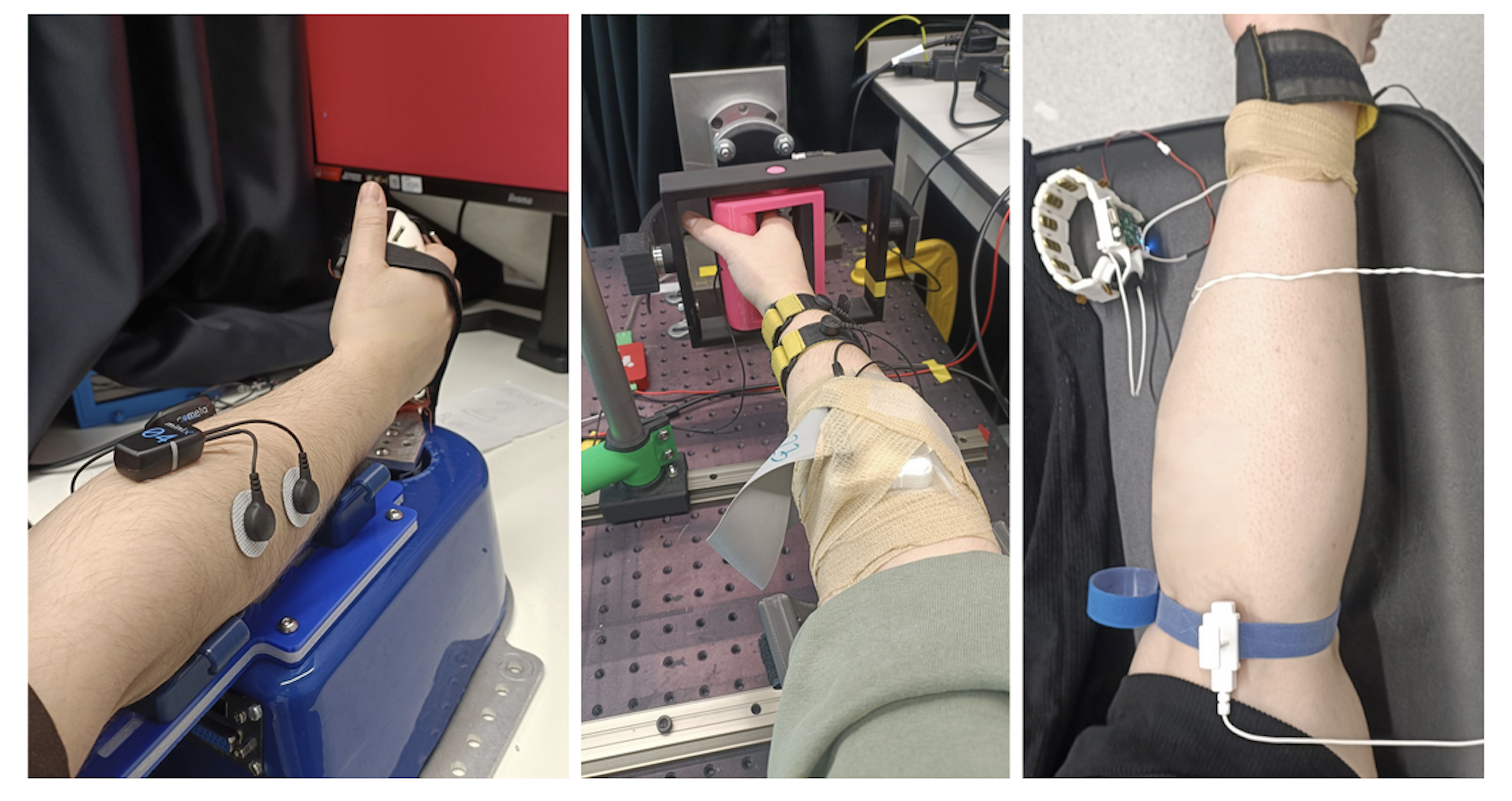
I found accommodation about a 20 minutes walk from my laboratory. On site, I mostly worked independently, but the open-space setup made it easy to ask questions to colleagues, mostly PhD students or postdocs working on related topics. I also had the opportunity to participate in various recording sessions and to become familiar with handling the equipment.
EMG recordings (left: monopolar, middle: high-density, right: with stimulation) EMG recordings (left: monopolar, middle: high-density, right: with stimulation)
Once a month, I met with Professor Farina to review my progress, and on a weekly basis with a designated student mentor. We are also considering continuing our collaboration beyond the DocWalker program. The team also organised meetings every two weeks to present the progress of each member’s work.
Do you have any advice for future mobility applicants?
If you have the opportunity to request a local contact person within your host team, it is a significant advantage. They can help speed up procedures, clarify administrative details, introduce you to team members, and facilitate connections with other researchers on site.
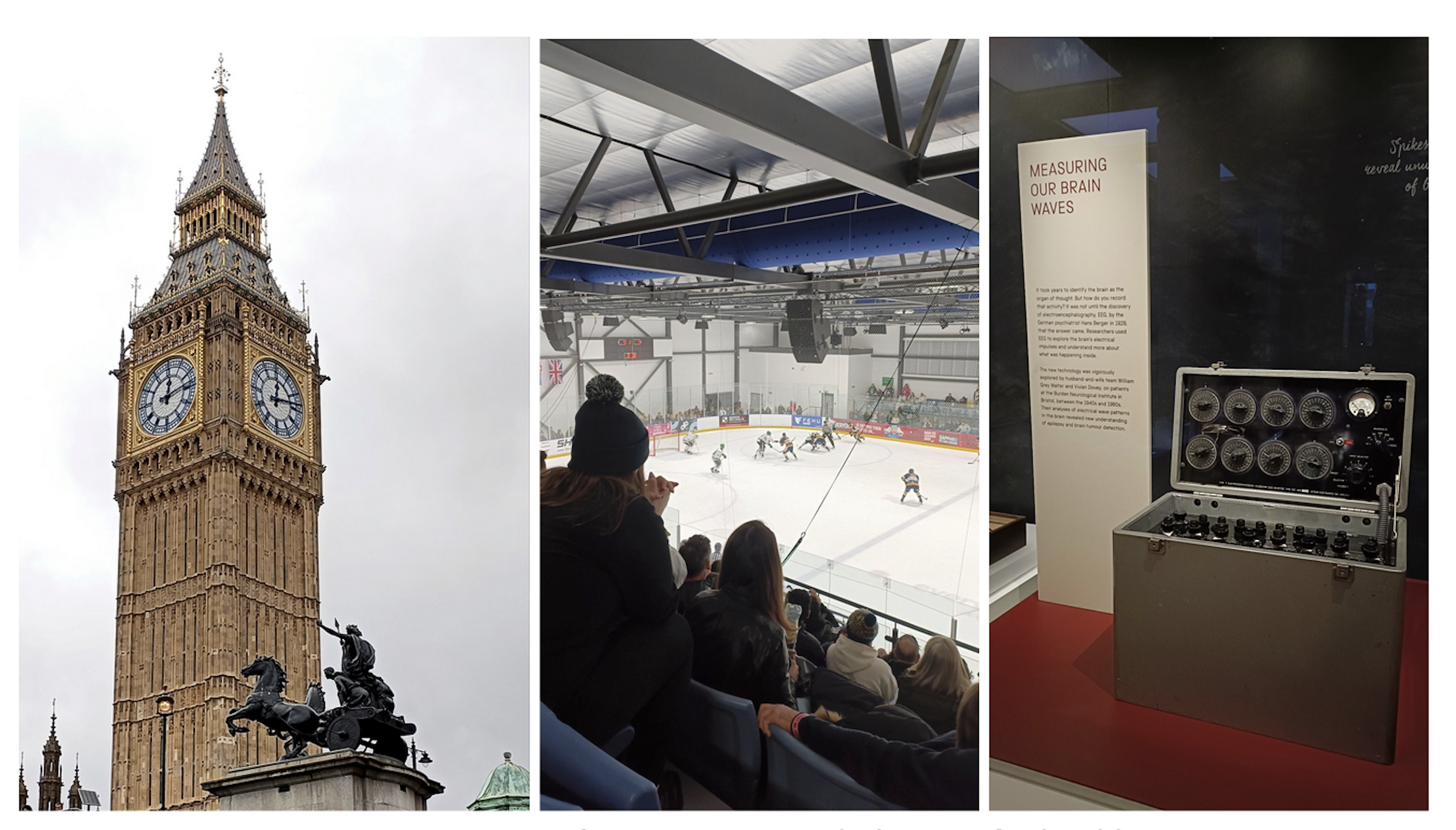
Plan your scientific stay… but also your weekends! Spending two months abroad on your own can sometimes feel long. I was fortunate to be in a capital full of cultural and tourist activities, and I made sure to plan a visit, match, or concert every weekend to make the most of it. I came back with unforgettable memories!
A somewhat ‘hidden gem’ of a landmark, a Romford Raiders match, and a precursor of EEG at the Science Museum A somewhat ‘hidden gem’ of a landmark, a Romford Raiders match, and a precursor of EEG at the Science Museum