
Student story - Margaux Schmied, PhD candidate at the i3S laboratory, laureate of the 2026 DocWalker program

Interview

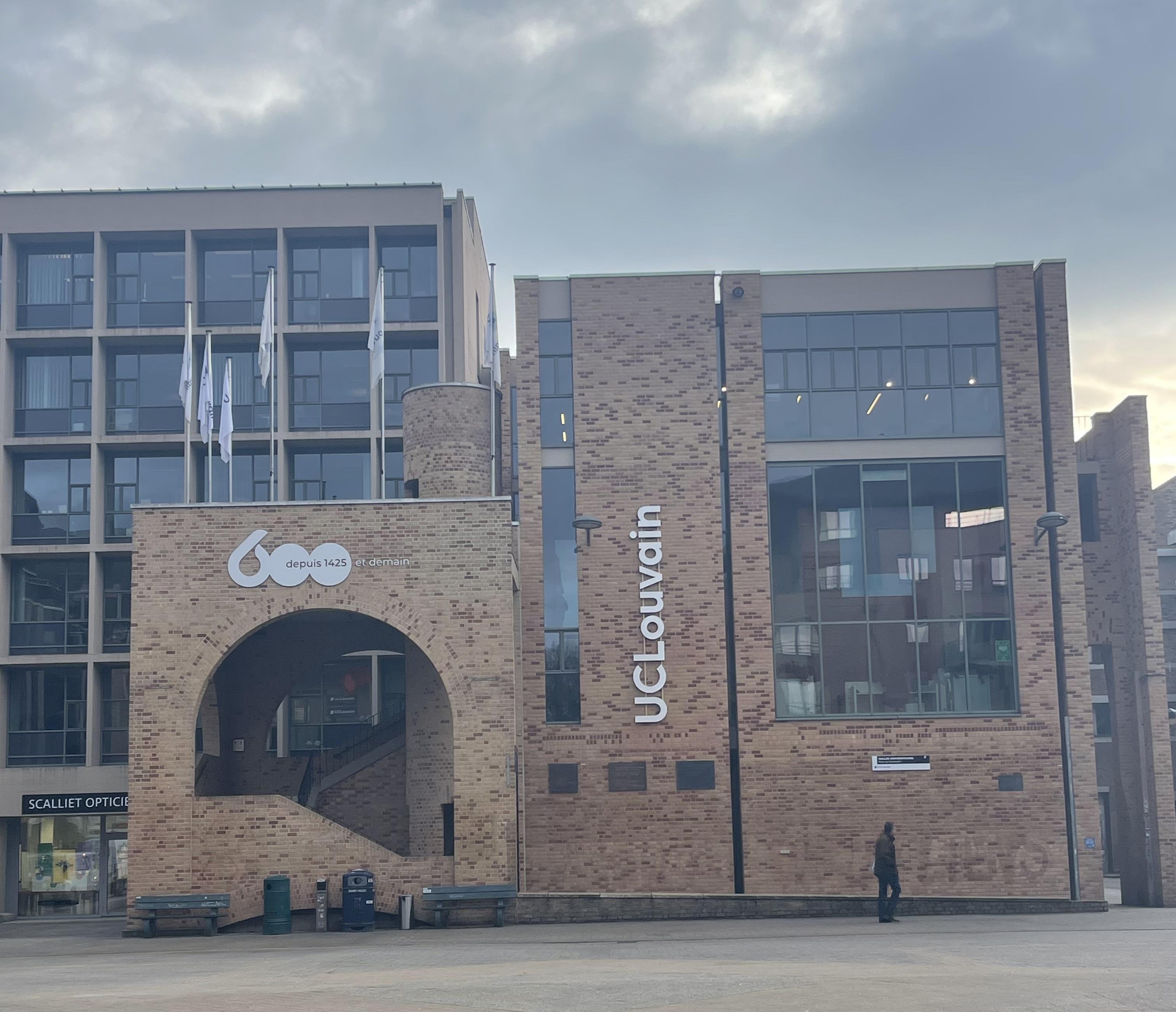
Margaux Schmied, a third-year PhD candidate at the i3S laboratory in Sophia Antipolis, reflects on her stay at the INGI laboratory of UCLouvain in Belgium, made possible through the DocWalker doctoral mobility program.

16 February 2026
 

What is your field of research?

I work in constraint programming, a field of artificial intelligence that involves modeling and solving complex decision problems using constraints. My research focuses in particular on global constraints with costs, and on the development of efficient bounds to improve the performance of solvers.

How did your international mobility project begin?

My mobility project grew out of an already existing scientific collaboration with a foreign research team specializing in optimization and constraint programming. As part of my doctoral research, it quickly became clear that a stay on site would make it possible to deepen this collaboration, compare my approaches with other methodologies, and broaden my scientific perspectives. The mobility opportunity therefore naturally became part of the continuation of my research work and reflected a desire for international openness.

How did you prepare for your departure?

The preparation took place on both the scientific and logistical levels. From a scientific perspective, we defined clear objectives in advance: the research questions to explore further, the experiments to conduct, and the expected results. This allowed me to arrive with a precise roadmap. On the logistical side, I anticipated the administrative procedures, housing, and practical matters so that I could fully focus on research once there. This preparation phase was essential to make the stay both effective and stress-free.
 

What was your daily life like there?

My daily routine was structured around research meetings, informal discussions with team members, and periods of individual work. Beyond the research itself, the stay was also an immersion in a new academic and cultural environment.

What do you take away from this doctoral stay abroad?

Above all, I take away a strong sense of both scientific and personal enrichment. From a scientific perspective, this stay allowed me to consolidate my research, refine certain theoretical approaches, and broaden my view of the issues addressed. On a personal level, it taught me to adapt to a new environment, to work in an international context, and to become more independent. This experience strengthened my interest in international collaborations and academic research.

Do you have any advice for future mobility candidates?

I would advise preparing the stay in advance with clear scientific objectives, while remaining open to unexpected opportunities. It is important to dare to ask questions, to engage in as many discussions as possible, and to fully benefit from the collective dynamic on site. Finally, don’t hesitate: an international mobility experience is demanding, but extremely enriching, both scientifically and personally.

Manneken Pis, Bruxelles
Manneken Pis, Bruxelles Manneken Pis, Bruxelles